


ROQUE Eye Clinic • Refractive Surgery
Implantable Collamer Lens (ICL): A Clear Patient Guide
🧠 Dr. Roque’s Quick Answer
Implantable Collamer Lens (ICL) surgery places a very thin prescription lens inside the eye to correct nearsightedness and astigmatism without removing corneal tissue. It can be an excellent option for patients who are not good candidates for LASIK or SMILE, especially when the prescription is high, the cornea is thin, or dry eye is a concern.
If you want freedom from thick glasses or contact lenses but you were told that LASIK or SMILE may not be ideal for your eyes, ICL may be worth a serious look. Many patients think refractive surgery always means laser reshaping of the cornea. That is wrong. ICL uses a different strategy. Instead of sculpting the front window of the eye, we place a soft, customized lens inside the eye to focus light more accurately.
That difference matters. It changes who may qualify, what the screening must include, what the risks are, and what the recovery usually feels like. The right question is not “Which procedure is more popular?” The right question is “Which procedure makes the most sense for this eye, this cornea, this prescription, and this patient’s priorities?”
🎯 Focus
Help you understand what ICL is, who may be a good candidate, how it compares with laser vision correction, and what realistic recovery and risk counseling look like.
🎯 Goal
Move you from vague interest to a more informed decision about whether ICL should be considered during your refractive surgery screening.
🎯 Evidence-Based
This page follows standard refractive-surgery counseling logic: careful screening, realistic risk discussion, individualized treatment selection, and no inflated claims.
👁️ Anatomy Micro-Primer
Think of the eye like a camera. The cornea is the clear front window. The natural lens sits deeper inside the eye and helps focus light. The iris is the colored part of the eye. The retina is the light-sensitive lining at the back that receives the image.
In ICL surgery, the implanted lens is usually placed behind the iris and in front of your natural lens. That means the treatment happens inside the eye, but your natural lens stays in place.
🧩 Terminology Glossary
- ICL – Implantable Collamer Lens, a soft prescription lens placed inside the eye.
- Myopia – Nearsightedness; far objects look blurry.
- Astigmatism – Irregular focusing that can make vision blurry or distorted.
- Anterior chamber depth – The space in the front part of the eye; this helps determine safety for ICL placement.
- Vault – The distance between the implanted lens and your natural lens after surgery.
- Endothelium – The delicate inner cell layer of the cornea that helps keep the cornea clear.
What is ICL surgery?
ICL surgery corrects refractive error by placing a thin lens inside the eye. The lens is designed to match your prescription. Unlike LASIK or SMILE, ICL does not reshape the cornea to the same degree because the correction comes mainly from the implanted lens itself.
Here is the practical analogy I use with patients: LASIK and SMILE change the windshield. ICL adds a new lens inside the camera. Neither concept is automatically better. The best choice depends on the actual structure of your eye.
💡 Dr. Roque’s Analogy
If your cornea is like valuable real estate, some eyes simply do not have enough extra space to “spend” on laser reshaping. In those cases, ICL may make more sense because it corrects vision without depending as heavily on removing corneal tissue.
Who may be a good candidate for ICL?
You may be a reasonable ICL candidate if you want less dependence on glasses or contact lenses and your screening suggests that laser corneal surgery may not be the best fit. Common examples include:
- Moderate to high myopia
- Myopia with significant astigmatism
- Thin corneas
- Corneas that may not safely tolerate the amount of laser correction needed
- Dry eye concerns, especially when avoiding extra corneal surface stress matters
- Patients who want a reversible-type strategy rather than permanent tissue removal
That said, “good candidate” is not a compliment. It is a technical conclusion. A patient is not a good ICL candidate because they want it badly. They are a good candidate only if the anatomy, measurements, refraction stability, corneal health, internal eye health, and risk profile all line up.
When ICL may be better than LASIK or SMILE
Patients often ask which procedure is “best.” That is the wrong frame. A smarter frame is which procedure is best matched to the eye in front of us.
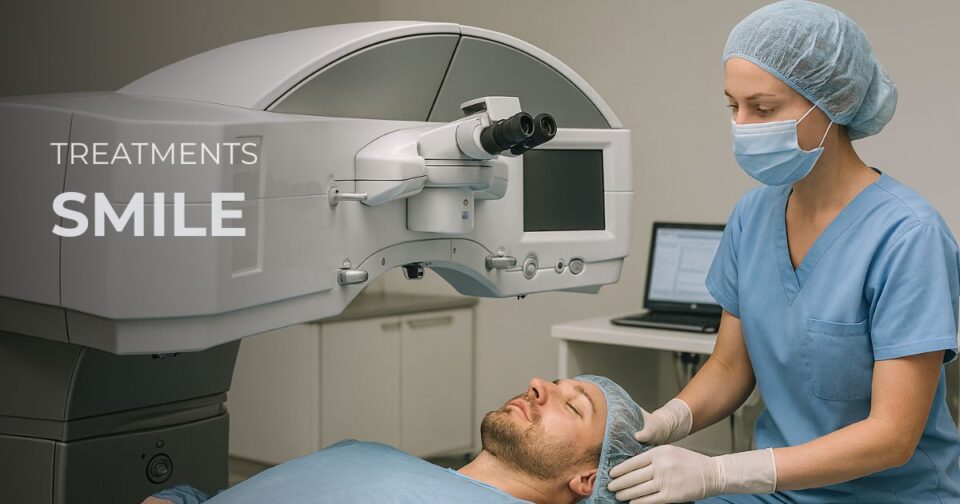
ICL may have an advantage when the prescription is high, when corneal tissue conservation matters, or when the cornea is not ideal for laser reshaping. Some patients also prefer the idea that no corneal flap is created and less corneal tissue is altered.
But do not oversimplify this. ICL is still intraocular surgery. That means it carries a different risk profile from corneal laser procedures. You cannot compare them honestly if you ignore that fact.
Who may not be a good candidate?
ICL is not appropriate for everyone. You may not be a suitable candidate if screening shows one or more of the following:
- Anterior chamber anatomy that is too tight for safe lens placement
- Eye measurements that raise concern about safety or long-term lens positioning
- Unstable prescription
- Active eye disease or untreated ocular surface problems
- Problems involving the natural lens, retina, glaucoma risk, or other internal eye issues that change the treatment plan
- Pregnancy or other situations where refractive measurements may be unreliable
This is where weak screening causes bad decisions. A refractive procedure should never be chosen by marketing appeal alone.
What are the main benefits of ICL?
- Excellent correction range for many myopic patients
- Less dependence on corneal tissue removal
- No LASIK flap
- Often attractive for patients with thin corneas
- May be preferable when preserving corneal structure is a priority
- The implanted lens can be removed or exchanged if needed, although that does not make the decision casual
What are the tradeoffs and risks?
This is where patient counseling must stay honest. ICL is attractive, but it is not magic and it is not risk-free.
- It is an intraocular procedure, so the risk category is different from surface-only laser surgery.
- Pressure changes can occur and must be monitored.
- The lens position and vault matter.
- Cataract development is an important counseling issue because the implanted lens sits near the natural lens.
- Inflammation, infection, glare, halos, or night-vision symptoms can still happen.
- You may still need glasses for some situations, especially if your visual demands are very specific.
- Future eye care still matters. Surgery does not remove the need for proper follow-up.
🚨 Dr. Roque’s Emergency Warning
If you have severe pain, sudden major blur, marked redness, nausea, vomiting, flashes, a curtain over vision, or rapidly worsening symptoms after eye surgery, do not wait for a routine follow-up slot. You need urgent ophthalmic assessment.
What does proper ICL screening involve?
Good screening is not optional. It is the procedure before the procedure. In my view, weak screening is where many refractive mistakes begin.
Screening may include:
- Full refraction and stability review
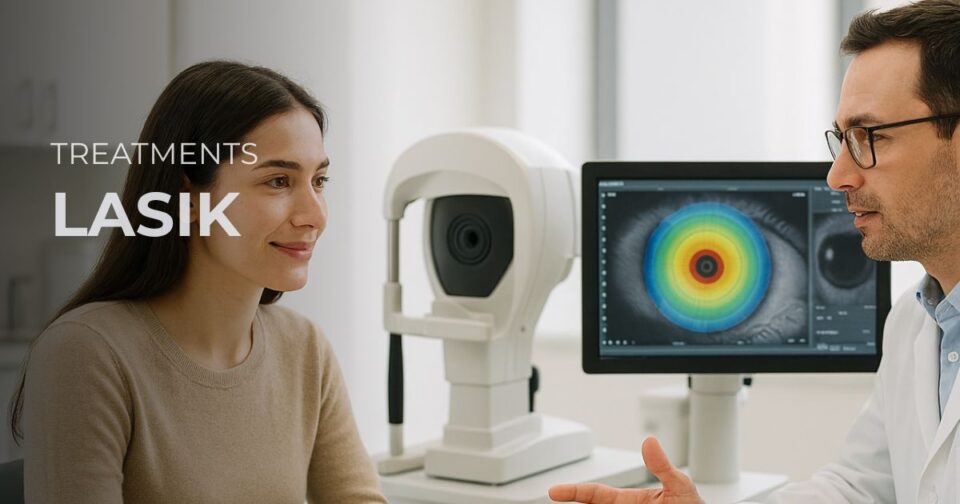
- Corneal measurements
- Anterior chamber depth assessment
- White-to-white and other sizing-related measurements
- Eye pressure assessment
- Dilated retinal examination when indicated
- Evaluation for dry eye, allergy, lid disease, and other surface issues
- Review of visual priorities such as night driving, computer work, sports, and reading needs
What happens on the day of surgery?
The eye is prepared in a sterile way. The implanted lens is inserted through a small incision and positioned behind the iris. The procedure is usually done with local anesthesia and sedation planning when appropriate. Most patients are surprised that the surgery itself is relatively quick, but quick does not mean trivial.
The real work is not only the operating time. The real work is patient selection, measurement accuracy, surgical precision, and responsible follow-up.
What is recovery like?
Recovery varies, but many patients notice improved vision early. That does not mean the eye is “finished” in a day. Early clarity and complete stabilization are not the same thing.
- Use your drops exactly as instructed.
- Do not rub the eye.
- Attend follow-up visits even if vision already seems good.
- Report pain, sudden blur, or unusual symptoms immediately.
- Protect the eye as instructed during early recovery.
Will I still need glasses after ICL?
Possibly, yes. Many patients achieve a major reduction in dependence on glasses, but no ethical surgeon should promise perfect vision in every situation. Some patients may still want glasses for very fine work, night driving, or later-life reading needs. The goal is better functional vision, not fantasy.
How ICL fits into the bigger refractive surgery decision
The best refractive plan is often not the first procedure a patient has heard of. It is the one that fits the eye most safely and most intelligently. Sometimes that is LASIK. Sometimes that is SMILE. Sometimes that is ICL. Sometimes the correct answer is not to proceed yet.
That is the standard. Not hype. Not prestige. Not guessing. Matching the right procedure to the right eye.
Related Reading
✅ Dr. Roque’s Take-Home Message
ICL can be an excellent treatment for the right patient, especially when laser corneal surgery is not the best fit. The decision should come from disciplined screening, not excitement alone. If you are considering ICL, the real goal is simple: choose the procedure that respects your eye’s anatomy, protects long-term safety, and matches your visual priorities.
Frequently Asked Questions
1. Is ICL better than LASIK?
Not automatically. It may be better for some eyes and worse for others. The correct comparison depends on your cornea, prescription, anatomy, and risk profile.
2. Can ICL treat astigmatism?
Yes, some ICL strategies can address astigmatism, but the exact plan depends on your measurements and lens selection.
3. Is ICL permanent?
The lens is intended to remain in the eye long term, but it can be removed or exchanged if clinically needed. That does not make it casual or reversible in a trivial sense.
4. Does ICL hurt?
Patients usually describe pressure or awareness more than sharp pain during surgery. Postoperative discomfort is often manageable, but abnormal pain should be reported.
5. How long does recovery take?
Many patients notice better vision early, but full recovery and stable follow-up assessment take longer than a single day.
6. Can I get ICL if I have dry eyes?
Sometimes yes. In some patients, ICL becomes attractive partly because preserving corneal tissue and minimizing extra surface stress matters. But your dry eye still needs proper evaluation and management.
7. Can I still develop cataracts later?
Yes. ICL does not make you immune to cataract formation. Cataract counseling remains part of responsible long-term eye care.
8. Will I see halos at night?
Some patients notice glare, halos, or night-vision symptoms. Risk and severity vary. This should be discussed before surgery, especially if night driving is important to you.
9. Is ICL safe?
It can be very safe in well-selected patients, but safety depends on correct screening, precise surgery, and proper follow-up. A procedure is not safe because it is fashionable. It is safe because the case was chosen and managed properly.
10. How do I know if I qualify?
You need a full refractive surgery evaluation. Qualification cannot be decided responsibly from age, glasses grade, or internet enthusiasm alone.
References
- American Academy of Ophthalmology refractive surgery educational materials and practice guidance.
- Peer-reviewed clinical literature on implantable collamer lens outcomes, candidacy, safety, and complications.
- Manufacturer and regulatory product information reviewed during surgical counseling and device selection.
ROQUE Eye Clinic Patient Education Series
Reviewed by the Roque Advisory Council
Dr. Manolette Roque | Dr. Barbara Roque
St. Luke’s Medical Center Global City | Asian Hospital Medical Center
Philippines
Medical Disclaimer: This page is for patient education and decision support. It does not replace an in-person eye examination, full refractive surgery screening, or individualized medical advice. Not every patient is a candidate for ICL. Final treatment recommendations depend on examination findings, diagnostic testing, eye anatomy, overall ocular health, and informed discussion of alternatives, benefits, limits, and risks.